Security Awareness for Finance Roles
The finance sector remains the top target for cyberattacks, with attacks surging 121% higher than before. These threats disrupt operations and risk fines. Keepnet’s security awareness training equips finance teams with the skills to detect and prevent threats, ensuring compliance and security.

On this page 10 sections
Finance professionals are a primary target for cybercriminals because of their essential responsibilities in handling organizational funds. Therefore, security awareness for finance roles becomes significant, as these individuals are critical in safeguarding financial resources. Additionally, compliance with standards, regulations, and laws requires cybersecurity training that includes topics like money laundering prevention.
Security awareness training is the first step to protecting financial assets from cyber threats. Discover the key principles in our guide: What is Security Awareness Training?
Standards, regulations, and laws require finance roles to adopt cybersecurity practices and training, including compliance training for issues like money laundering.
Recent data highlights the urgency of addressing these risks:
- According to the Verizon Data Breach Investigations Report (2024), ransomware and extortion account for 62% of financially motivated incidents, with organizations suffering a median financial loss of $46,000 per breach.
- According to Fraudify Wrapped 2024 from The Association of Certified Fraud Examiners (ACFE), deepfake BEC scams have emerged as one of the most sophisticated fraud methods. Cybercriminals now use AI to mimic the voices and faces of CEOs, CFOs, and even government officials, deceiving employees into transferring funds, altering contracts, or leaking sensitive information.
- According to VIPRE's Q3 2024 report, BEC scams made up 58% of phishing attempts, with 89% impersonating CEOs and IT staff.
Building security behavior and culture is essential to mitigating risks such as invoice fraud, business email compromise (BEC), and other cyber threats.
This blog examines the security challenges faced by finance professionals, highlights emerging attack trends, outlines strategies for effective training programs, and showcases how Keepnet's platform for human risk management and secure behaviour management delivers tailored solutions to combat these risks effectively.
Who Are Finance Professionals in a Business?
Finance professionals are responsible for the organization’s financial integrity and compliance. Key roles include:
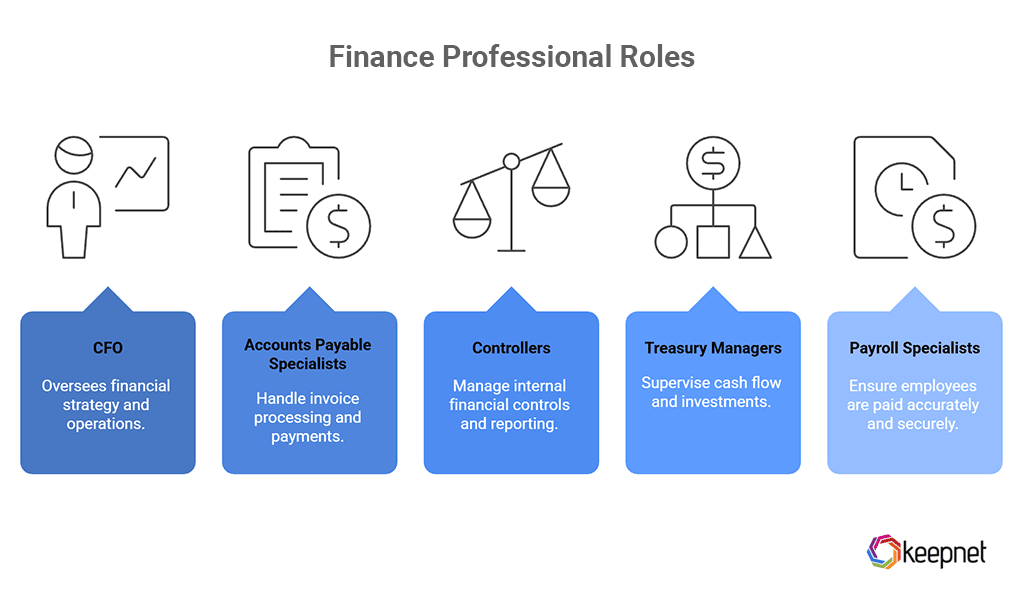
- Chief Financial Officer (CFO): Oversees financial strategy and operations.
- Accounts Payable Specialists: Handle invoice processing and payments.
- Controllers: Manage internal financial controls and reporting.
- Treasury Managers: Supervise cash flow and investments.
- Payroll Specialists: Ensure employees are paid accurately and securely, including proper tracking of YTD earnings for tax and reporting purposes.
These professionals have access to critical financial systems, confidential client information, and transaction approval mechanisms. As such, their accounts are prime targets for cyberattacks.
Why Are Finance Roles Targeted by Hackers?
Finance professionals are key targets for cybercriminals due to their access to financial transactions and critical operations. By exploiting their roles, attackers can manipulate payments, invoices, and vendor interactions. Understanding these risks is significant for enhancing security. The main reasons finance roles are targeted include:
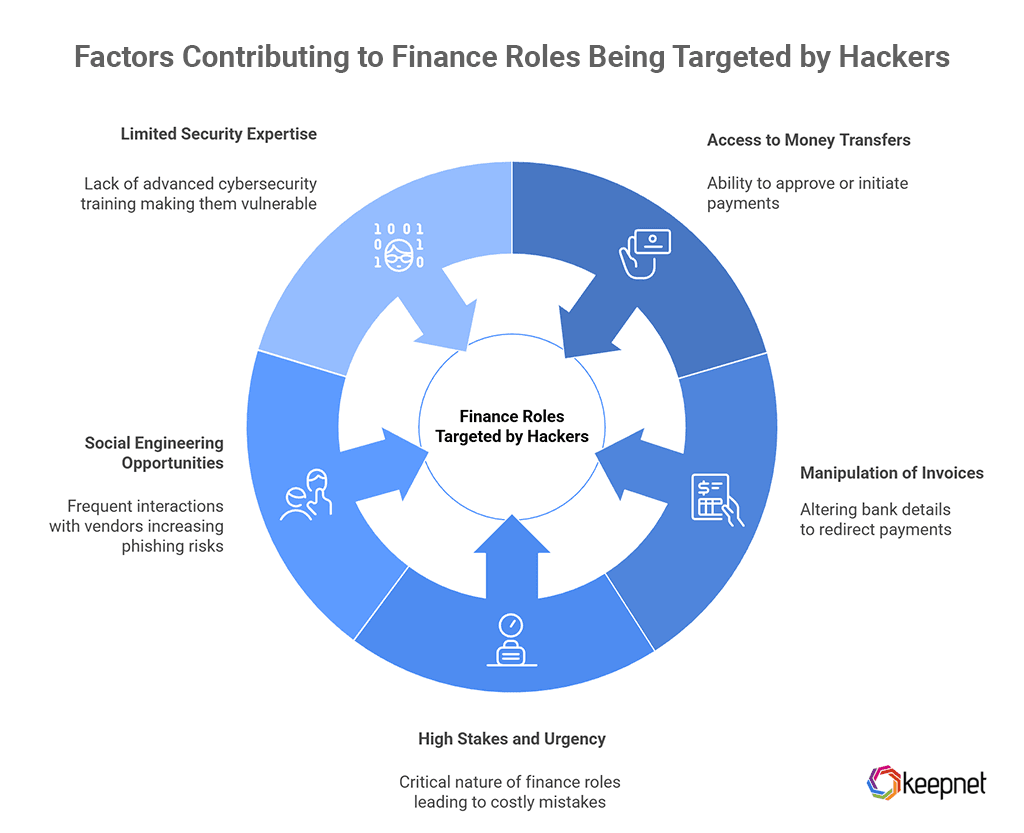
- Access to Money Transfers: Cybercriminals exploit their access to approve or initiate payments.
- Manipulation of Invoices: Attackers alter bank details on invoices to redirect payments to fraudulent accounts.
- High Stakes and Urgency: The critical nature of finance roles means mistakes can be costly.
- Social Engineering Opportunities: Finance teams frequently interact with external vendors, increasing exposure to phishing and vishing attacks.
- Limited Security Expertise: Many finance professionals are not trained in advanced cybersecurity practices, making them vulnerable to evolving threats.
Notable Cyberattack Trends Targeting Finance Roles
In 2024, several significant cyber incidents targeted financial roles, underscoring the critical need for robust security measures:
- Deepfake CFO Attack: According to CNN, a U.S.-based company lost $25 million in a sophisticated cyberattack where criminals used deepfake technology to impersonate the Chief Financial Officer (CFO) and authorize fraudulent payments. This case demonstrates the growing threat of AI-enabled fraud and its severe financial implications.
- Business Email Compromise (BEC) in the Manufacturing Sector: According to InfoSec Magazine, on August 2024, a large UK-based manufacturing company lost a $60m financial loss due to a BEC scam that exploited routine supplier communications. This incident highlights the pervasive risk of BEC across various industries.
- Melbourne Family's Home Purchase Scam: According to 7News, a Melbourne couple lost over $500,000 when hackers infiltrated their conveyancer's email server and sent fraudulent payment instructions with altered bank details. This case emphasizes the importance of verifying payment details through multiple channels.
These incidents demonstrate the evolving tactics of cybercriminals and the necessity for finance professionals to remain vigilant, verify transaction details independently, and participate in ongoing security awareness training to protect against such threats.
Why Is Security Awareness Training Essential for Finance Roles?
Security awareness training is essential for finance professionals, who are frequently exposed to complex cyber threats that exploit their critical role in handling sensitive transactions and financial data.
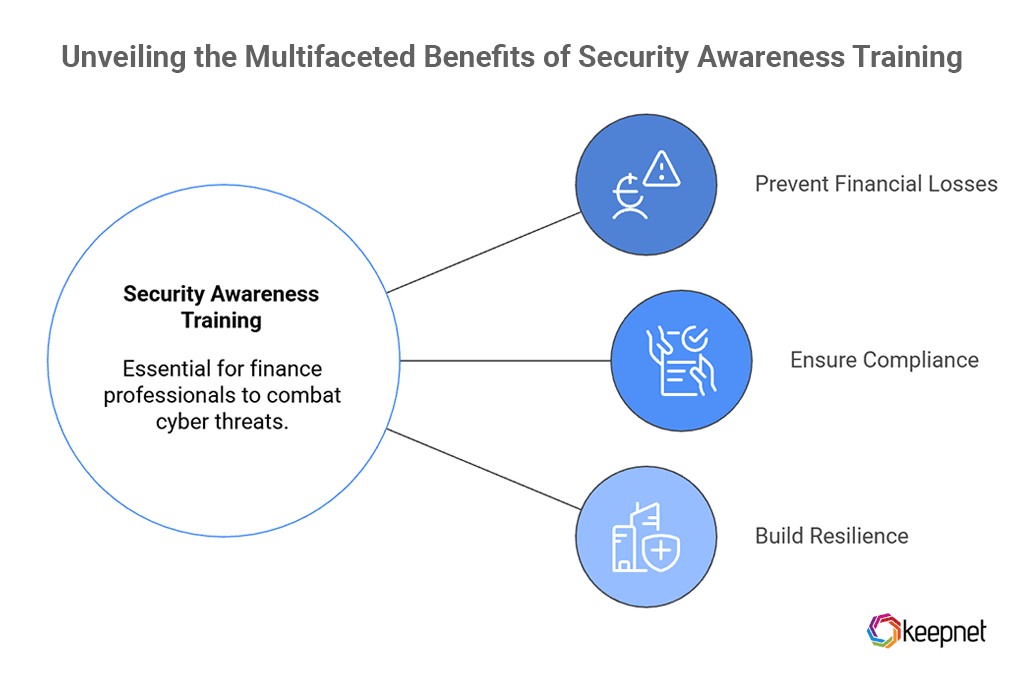
- Prevent Financial Losses: Reducing the risk of fraud directly impacts the organization’s bottom line.
- Ensure Compliance: Safeguarding sensitive financial data aligns with GDPR, SOX, PCI DSS, and other regulations.
- Build Resilience: Empowering finance teams to identify and respond to threats reduces organizational risk.
Security awareness training
Training that follows what each employee does
Short modules and nudges matched to behaviour, with compliance reporting built in.
Challenges in Training Finance Professionals
Training finance professionals presents unique challenges due to their demanding schedules, critical responsibilities, and varying levels of cybersecurity expertise. Addressing these hurdles requires tailored strategies that respect their constraints while effectively mitigating cyber risks.
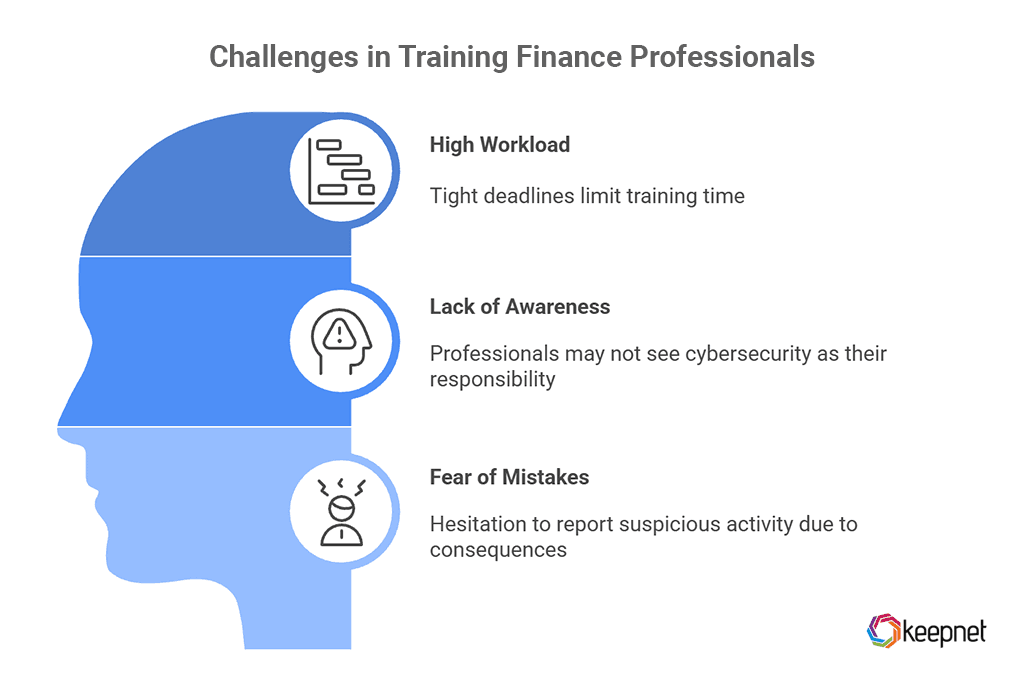
- High Workload: Finance teams often operate under tight deadlines, leaving little time for lengthy training.
- Lack of Awareness: Many professionals may not recognize cybersecurity as part of their role.
- Fear of Mistakes: Reporting suspicious activity may feel intimidating due to potential consequences.
Strategies for Effective Security Awareness Training
Effectively training finance professionals in cybersecurity involves addressing their specific challenges while empowering them with practical, role-relevant solutions. These strategies ensure they can mitigate risks without disrupting critical financial operations.
- Hyper-personalized Training: Provide individualized training experiences that adapt to the specific risks and behaviors of finance professionals, addressing threats like invoice fraud, BEC, and ransomware with precision.
- Concise Delivery: Use microlearning modules that take no more than 90 seconds to complete.
- Real-World Examples: Share anonymized incidents, such as the Toyota Boshoku fraud case, to emphasize the risks.
- Adaptive Phishing Simulations: Implement phishing simulations that evolve with modern threats, including SMS, voice-based attacks, multi-factor authentication (MFA) phishing, QR code phishing, and callback scams. These phishing simulations provide hands-on learning experiences that adapt to the tactics cybercriminals use today.
- AI Nudges: Use AI technologies to remind finance professionals to verify bank details or flag suspicious emails.
- Privacy Protection: Ensure training programs are designed to maintain confidentiality and avoid punitive measures.
Security Awareness Training Program for Finance Roles
A well-structured security awareness training program ensures finance professionals are equipped to handle specific cyber threats relevant to their roles. This program provides a clear framework for addressing common risks while meeting compliance requirements.
| Training Category | Topic | Risky Behavior Addressed | Compliance Requirements | Nudge Examples |
|---|---|---|---|---|
| Email Security | Phishing and BEC | Responding to fraudulent emails | GDPR, SOX | Verify email sender details. |
| Invoice Fraud Awareness | Bank Detail Verification | Approving invoices with altered details | PCI DSS | Double-check bank changes |
| Incident Reporting | Fraud Detection | Delayed reporting of suspicious activity | GDPR, SOX | Report unusual transactions |
| Data Protection | Secure File Sharing | Sharing financial data insecurely | GDPR, PCI DSS | Use encrypted platforms |
| Mobile Security | Ransomware Awareness | Using unsecured devices | HIPAA, PCI DSS | Avoid public Wi-Fi for payments. |
| AI Deepfake Attacks | Impersonation Awareness | Falling for deepfake impersonations | None | Verify audio/video authenticity |
| CEO Fraud Awareness | Authorization Protocols | Approving unauthorized transactions | SOX | Follow approval protocols |
| Compliance Training | Regulatory Requirements | Failing to meet financial compliance | GDPR, SOX, PCI DSS | Stay updated with training reminders |
How Keepnet Supports Finance Security Awareness
Keepnet offers tailored, role-specific training programs designed to empower finance professionals against advanced cyber threats without interrupting their workflows. Here’s how Keepnet delivers unmatched value:
Here’s how:
- Realistic Phishing Simulations: Leverage 22,000+ phishing campaign templates to replicate real-world threats such as invoice fraud and phishing. These engaging, hands-on phishing simulations help finance professionals build practical skills to identify and respond to sophisticated cyberattacks effectively.
- Outcome-driven Metrics: Keepnet’s finance-specific dashboards track key metrics like phishing simulation success rates, completion rates for training modules, and reporting times for suspicious activities. These insights help identify risks and improve compliance with GDPR, SOX, and PCI DSS.
- Microlearning Modules: Concise, impactful training sessions respect the time constraints of finance teams.
- Privacy Protection: Data is anonymized, ensuring confidentiality and trust.
- Gamification Dashboard: Keepnet boosts engagement and knowledge retention with interactive features like quizzes, challenges, and leaderboards.
- Compliance Alignment: Training programs ensure adherence to GDPR, SOX, PCI DSS, and other regulations.
- Phishing Reporting and Analysis: Keepnet streamlines phishing detection with its Phishing Reporter add-in, integrated into platforms like Microsoft Outlook and G-Suite. Employees can report suspicious emails with a single click, forwarding them with all metadata intact for detailed analysis. This empowers employees and enhances incident response, enabling swift and effective phishing threat mitigation.
Finance professionals are essential to maintaining an organization’s financial security. By providing tailored, concise, and actionable training, including realistic phishing simulations and nudges, businesses can equip their finance teams to identify and mitigate evolving cyber threats. WithKeepnet’s security awareness solutions, finance professionals can confidently safeguard organizational assets while ensuring compliance with industry regulations.
What Better Program Design Looks Like
Security Awareness for Finance Roles works best when the content reflects how people actually make decisions. Strong programs do not try to teach everything at once. They focus on the few behaviors that create the most risk, then reinforce them with current examples, timely reminders, and clear reporting paths.
That is also what makes training easier to defend internally. When a program changes behavior, reduces repeat-risk patterns, or improves reporting quality, leaders can see how awareness supports real business outcomes instead of acting like a standalone compliance activity.
Keepnet teams usually see the biggest gains when training is tied to a reporting path and a follow-up workflow. For most organizations, the common mistake is treating security awareness for finance roles as content delivery instead of behavior design.
Program Checklist
- Choose the user decisions that matter most instead of covering every possible topic.
- Use short modules, current examples, and realistic follow-up after incidents or simulations.
- Measure reporting, repeat risk, and remediation behavior, not only completions.
- Give managers and team leads a role in reinforcing the habits you want to build.
Frequently asked questions
Use a simple rule that everyone can follow even during month end close: treat every new bank account and every bank change as high risk until independently verified. Confirmation should happen out of band, meaning not by replying to the same email thread. Use a known phone number from your vendor master data, require dual approval for changes, and time lock the first payment to a new account when possible. Pair this with security awareness for finance roles so people recognize the social engineering pressure behind “urgent” change requests.
BEC emails often look clean, but the intent is usually the giveaway. Watch for urgency, secrecy, a sudden change in payment instructions, unusual tone from a known contact, or a request to bypass the normal approval workflow. Also look for subtle domain tricks, display name impersonation, and “sent from mobile” style pressure. Finance security awareness training works best when it teaches decision points, not just definitions, so the team learns when to pause, verify, and escalate.
Assume the channel can be spoofed. Treat any payment instruction that arrives outside your official process as untrusted until verified through your approved workflow. If a request comes via text or voice, route it back into your ticketing or ERP approval path and confirm using a second factor like a call back to a saved number, not the number provided in the message. This is where cybersecurity training for finance professionals should include vishing and callback scenarios, not only email phishing.
Speed matters more than embarrassment. First, report it using the company’s phishing reporting method or to the security team, even if you are not sure. Second, disconnect from the network if instructed by policy and change passwords from a safe device. Third, flag any pending payments, bank changes, or approvals you touched in the last few hours so finance leadership can add friction before funds move. The best security awareness for finance roles normalizes fast reporting and treats it as risk containment, not failure.
Deepfakes succeed when “voice equals authority.” Replace authority with verification. Use a two person rule for high value transfers, require a written confirmation step inside your approved system, and use challenge questions or pre agreed code phrases for exceptional requests. Limit public audio video that makes cloning easier where practical, and rehearse deepfake scenarios in simulations so staff experience the pressure safely. For finance teams, deepfake BEC training should focus on process controls, not trying to be human lie detectors.
Finance teams do not need long sessions. They need consistent, role relevant touchpoints. A practical cadence is short microlearning weekly or biweekly, with slightly deeper refreshers quarterly, timed away from peak close days. During close, use quick reminders, checklists, and just in time nudges tied to payment workflows. The goal is to build muscle memory around verification steps for invoices, bank changes, and approvals, so the training supports speed and accuracy rather than competing with it.
Completion rates are not enough. Track behavior change that maps to financial risk. Useful signals include reporting rate of suspicious emails, time to report, reduction in repeat clicks in phishing simulations, fewer policy bypass attempts, and fewer near misses in vendor change workflows. Pair training results with finance controls data such as bank change exceptions, rejected approvals, and dual authorization compliance. A human risk management approach treats these metrics like leading indicators, helping you intervene before a loss happens.
Payroll is a favorite target because changes feel routine and time sensitive. Lock down direct deposit changes with strong identity verification, require multi step confirmation, and avoid accepting changes by email alone. For W-2 and employee data requests, require documented authorization and use a secure portal rather than attachments. Include payroll scenarios in cybersecurity training for finance professionals so the team practices saying no, routing requests correctly, and escalating quickly when an executive impersonation attempt shows up.
Vendor onboarding is where attackers plant future payouts. Use a standardized onboarding checklist that validates legal entity details, tax information, and banking data using trusted sources. Separate duties so the person requesting a vendor cannot be the only person approving it. Add friction for first payments, and monitor for look alike names that mimic real suppliers. Train the team on the psychology of supplier fraud, because the most dangerous scams sound helpful, cooperative, and “normal” until the money is gone.
Make reporting a professional expectation, not a confession. Reward early reporting because it reduces loss, protects audit outcomes, and strengthens compliance. Keep feedback private, focus coaching on the process step that failed, and share anonymized lessons learned so the whole team improves. Accountability should live in the control design and leadership follow through, not in shaming the first person who got targeted. Strong security awareness for finance roles is a culture system, not a one time training event.
Schedule your 30-minute demo now
You’ll learn how to:
- Deliver tailored security awareness training for finance teams.
- Simulate invoice fraud and business email compromise (BEC) attacks for hands-on learning.
- Strengthen financial transaction security with AI-driven nudges.
30 minutes with a Keepnet specialist, on your own use cases.

Author
Ozan Ucar
Founder and CEO, Keepnet
Ozan founded Keepnet in 2017 and has worked in cyber security since 2006. He leads Keepnet's product direction and works with security teams on measuring and changing the behaviours behind incidents.